Best Roof Shingles for High Wind: Our Top Picks
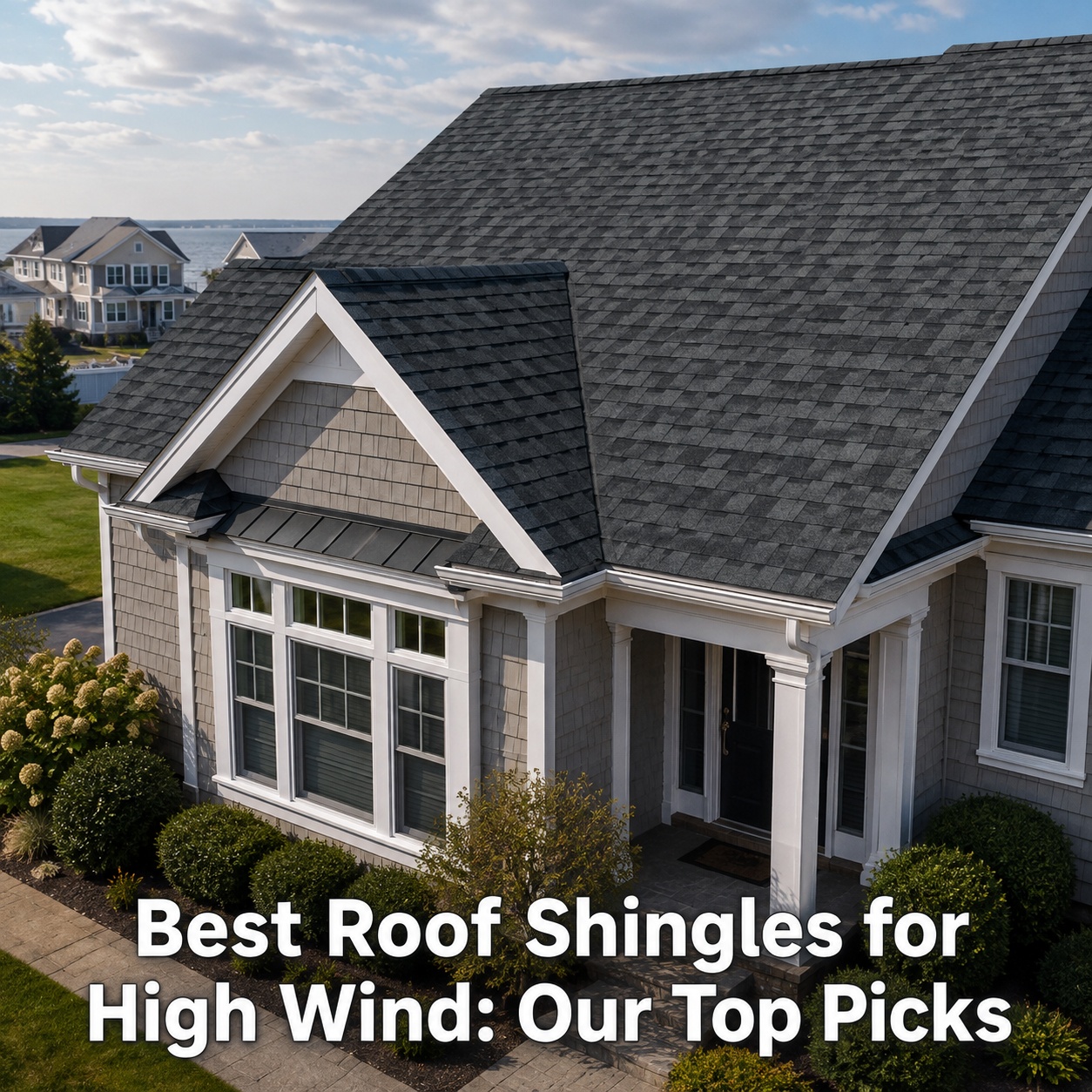
Living in a high-wind region means your roof faces constant stress that most homeowners never think about until something goes wrong. A shingle that performs beautifully in calm conditions can lift, crack, or peel away entirely when sustained winds push past certain thresholds. Choosing the right product from the start protects your home, your wallet, and your peace of mind for decades.
The market for wind-resistant roofing has grown significantly, and manufacturers now offer products engineered specifically for hurricane-prone coastlines, tornado corridors, and mountain ridgelines. Understanding what separates a genuinely wind-resistant shingle from a standard one requires looking beyond marketing language and into actual performance data, ASTM standards, and real-world installation practices.
This guide walks you through the top shingle picks for high-wind environments, explains what features matter most, and gives you the buying advice you need to make a confident decision. Whether you are replacing a damaged roof or building new, the information here will help you match the right product to your specific climate and budget.
Best Roof Shingles for High Wind: Top Picks
Key features to compare
Not all asphalt shingles are created equal, and the differences become obvious when wind speeds climb. The most important features to evaluate include wind rating in MPH wind speed, nail pattern requirements, adhesive strip quality, and overall shingle weight. Heavier architectural shingles generally outperform lighter three-tab options because their mass and layered construction resist wind uplift more effectively.
Class 4 shingles represent the highest impact resistance rating available, and many of these products also carry superior wind resistance certifications. Look for shingles tested to ASTM D3161 or ASTM D7158 standards, which simulate real-world wind conditions in controlled laboratory environments. Products meeting these ASTM standards give you a reliable baseline for comparison.
The table below summarizes the key comparison points across the leading product categories available today.
| Shingle Type | Wind Rating (MPH) | Impact Rating | Best For | Price Tier |
|---|---|---|---|---|
| Standard Architectural | Up to 110 MPH | Class 3 | Moderate wind zones | Entry level |
| Premium Architectural | Up to 130 MPH | Class 3 to 4 | High-wind regions | Mid range |
| Impact-Resistant Class 4 | Up to 150 MPH | Class 4 | Hurricane and hail zones | Premium |
| Metal Roofing Panels | Up to 160+ MPH | Class 4 | Extreme wind environments | Premium |
GAF shingles, CertainTeed shingles, and Owens Corning all produce strong contenders in the architectural and impact-resistant categories. Each brand offers product lines specifically engineered for hurricane resistance and high-wind performance, with warranty coverage that reflects their confidence in those claims.
Performance in high-wind conditions
Real-world performance depends on more than the shingle itself. The roof deck condition, starter strips placement, nail pattern, and overall installation quality all contribute to how well any shingle survives a major wind event. A premium shingle installed incorrectly will fail before a mid-range shingle installed by an experienced roofing contractor following manufacturer specifications.
GAF’s Timberline HDZ line consistently earns high marks for wind resistance, rated to withstand winds up to 130 MPH with standard installation and higher with enhanced nailing patterns. CertainTeed’s Landmark series offers similar performance with a strong reputation for adhesive strip reliability, which is the feature most responsible for preventing shingle lift during sustained gusts.
Owens Corning’s Duration series uses a patented SureNail technology that creates a wider nailing zone, reducing the chance of improper nail placement during installation. This matters enormously in high-wind regions because a nail placed even slightly outside the designated zone can reduce that shingle’s wind resistance by a significant margin. For coastal environments where salt air and wind combine, you can find additional guidance on roofing materials designed specifically for coastal homes that face these compounding challenges.
Metal roofing deserves mention here as well. Standing seam metal panels interlock mechanically rather than relying on adhesive strips, making them inherently more resistant to wind uplift. They carry Class 4 impact resistance ratings and can handle MPH wind speeds that exceed what most asphalt shingles can manage.
Features, Benefits, and Pricing
Durability and warranty coverage
Durability in roofing materials is measured across several dimensions: resistance to wind, impact, UV degradation, and moisture infiltration. The best high-wind shingles address all of these simultaneously because a roof weakened by UV damage or moisture intrusion becomes far more vulnerable to wind failure over time.
GAF shingles in the premium tier come with a lifetime limited warranty and a separate wind warranty that covers specific MPH wind speed thresholds. CertainTeed shingles offer similar warranty structures, with their SureStart protection covering manufacturing defects and their wind warranty covering performance in high-wind conditions. Owens Corning backs its Duration series with a lifetime limited warranty and a wind warranty that extends to 130 MPH under standard installation.
- Lifetime limited warranties cover manufacturing defects and premature granule loss
- Wind warranties specify the maximum MPH wind speed covered and the nail pattern required to maintain coverage
- Impact resistance warranties may reduce your homeowner’s insurance premium in qualifying states
- Transferable warranties add resale value to your home
- Warranty coverage often requires installation by a certified roofing contractor
Reading the fine print on warranty coverage matters more than most homeowners realize. Some warranties require specific starter strips, ice and water shield underlayment, and roof ventilation products from the same manufacturer to remain valid. Skipping any of these components can void the wind warranty entirely, leaving you unprotected after a storm.
Class 4 shingles carry the most comprehensive warranty packages because manufacturers know these products are being installed in the most demanding environments. The investment in a Class 4 product typically comes with warranty terms that reflect the product’s superior engineering and testing against ASTM standards.
Cost versus long-term value
Pricing for wind-resistant shingles follows a clear tier structure. Entry-level architectural shingles cost less upfront but offer lower wind ratings and shorter effective lifespans in high-wind environments. Mid-range products hit a sweet spot for most homeowners in moderate wind zones, offering meaningful wind resistance without the premium price of Class 4 options. Premium impact-resistant shingles and metal roofing cost more than standard options, sometimes roughly double the entry-level price, but they deliver substantially better performance and longer service life.
What drives the price up in wind-resistant roofing materials includes the quality of the fiberglass mat, the thickness and weight of the asphalt coating, the strength of the adhesive strips, and the complexity of the manufacturing process required to achieve Class 4 ratings. Installation costs also increase in high-wind regions because proper nail pattern requirements, starter strips, and ice and water shield add both material and labor time.
- Shingle weight and thickness directly affect material cost
- Enhanced nail patterns require more fasteners and more installation time
- Starter strips and ice and water shield add to total project cost
- Roof deck repairs discovered during replacement increase the final bill
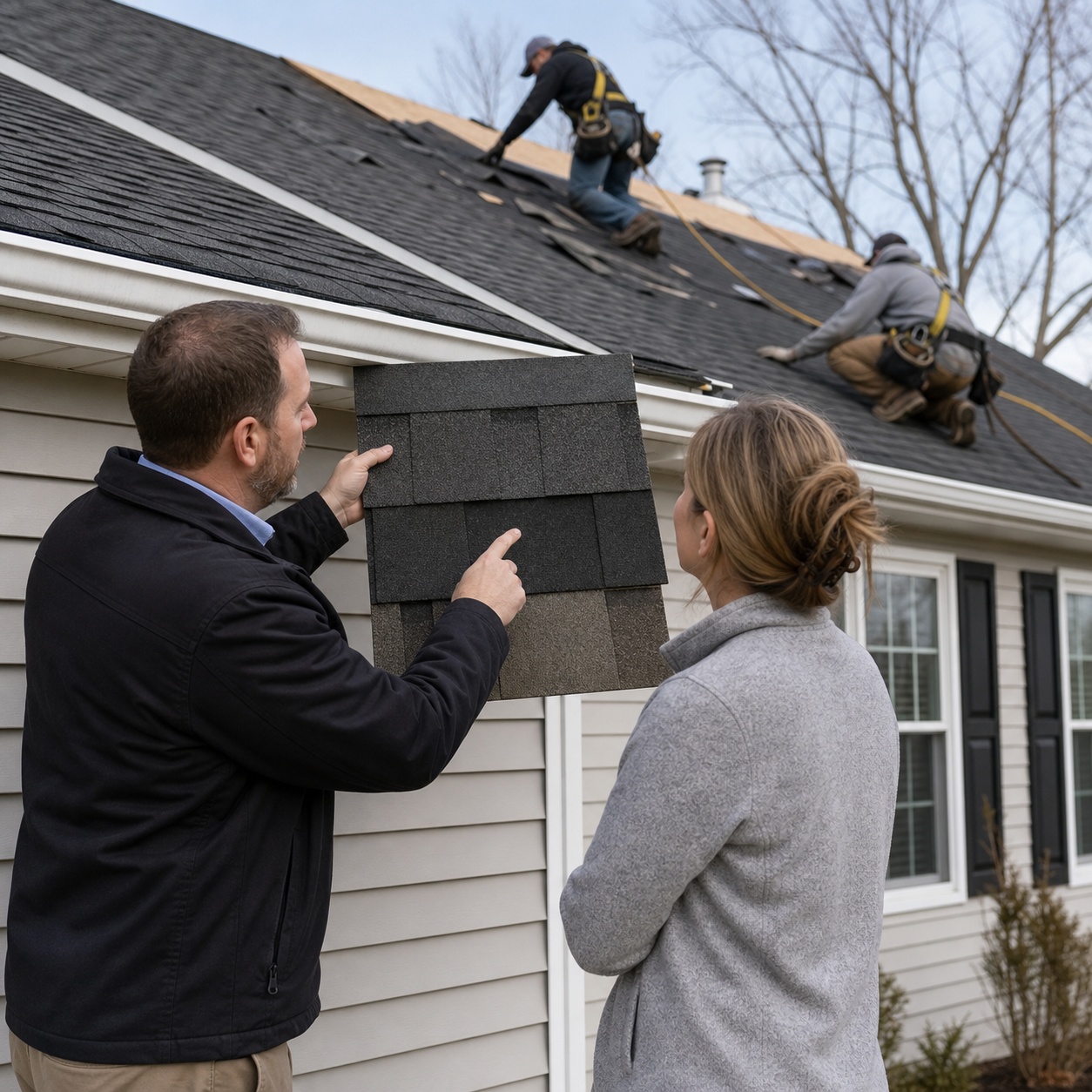
- Certified roofing contractor installation may cost more but protects your warranty
The long-term value calculation favors premium products in genuinely high-wind environments. A roof that survives a major storm without damage avoids the cost of emergency repairs, insurance deductibles, and interior water damage remediation. Get a free written quote for your specific project before making any final decisions, since actual costs vary considerably based on roof size, pitch, and local labor rates.
User Experience and Installation
Ease of installation for contractors
From a roofing contractor’s perspective, some high-wind shingles are significantly easier to install correctly than others. Owens Corning’s SureNail technology, mentioned earlier, reduces installation errors by making the nailing zone visually obvious. This matters because even experienced crews can misplace nails under time pressure or in difficult weather conditions.
GAF shingles in the Timberline HDZ line use a LayerLock technology that bonds shingles together during installation, creating a unified surface that resists wind uplift more effectively than individual shingles relying solely on adhesive strips. CertainTeed shingles use a similar approach with their Landmark series, incorporating a dual-layer construction that adds both weight and structural integrity.
- Wider nailing zones reduce installation errors and improve wind resistance
- Self-sealing adhesive strips activate with heat, so cold-weather installation may require hand-sealing
- Heavier shingles require more physical effort but deliver better wind performance
- Starter strips must be installed at eaves and rakes to prevent edge lift
- Proper roof deck preparation ensures nails penetrate adequately for maximum holding power
The nail pattern specified by the manufacturer is not optional in high-wind zones. Most standard installations use four nails per shingle, but many wind-rated products require six nails per shingle to achieve their rated MPH wind speed performance. This detail is frequently overlooked by contractors unfamiliar with high-wind installation requirements, and it can mean the difference between a roof that survives a hurricane and one that does not.
Roof ventilation also plays a role in installation planning. Proper roof ventilation reduces the pressure differential between the attic and the exterior during high-wind events, which in turn reduces wind uplift forces acting on the shingles from below. A well-ventilated roof deck supports better overall wind resistance regardless of which shingle product you choose.
Maintenance, appearance, and noise considerations
High-wind shingles require less maintenance than you might expect, largely because their superior construction also makes them more resistant to the everyday weathering that causes standard shingles to deteriorate. Granule retention is better in premium products, which means they maintain their protective coating longer and require fewer repairs over their service life.
Architectural shingles offer a dimensional appearance that mimics wood shake or slate, giving your home a premium look without the maintenance demands of natural materials. Class 4 shingles are available in a wide range of colors and profiles, so you do not have to sacrifice aesthetics for performance. GAF shingles, CertainTeed shingles, and Owens Corning all offer extensive color palettes in their high-wind product lines.
- Heavier shingles tend to absorb sound better than lighter options, reducing rain noise
- Metal roofing can amplify rain and hail noise without proper underlayment
- Algae-resistant coatings are available in most premium shingle lines
- Impact-resistant shingles show less visible damage from hail, maintaining curb appeal longer
- Regular inspection after major wind events helps catch minor issues before they become major repairs
Noise is a consideration that homeowners rarely think about until after installation. Metal roofing, while excellent for wind resistance, can be noticeably louder during rain and hail events unless proper underlayment and insulation are installed beneath it. Asphalt shingles, particularly heavier architectural and Class 4 options, tend to dampen sound effectively and perform quietly in most weather conditions.
Alternatives and Buying Advice
When to choose architectural versus impact-resistant shingles
The choice between architectural shingles and impact-resistant Class 4 shingles depends primarily on your specific wind and weather environment. Architectural shingles rated to 110 or 130 MPH wind speed are appropriate for most high-wind regions that do not regularly experience hurricane-force conditions or significant hail. They offer a meaningful upgrade over standard three-tab shingles at a more accessible price point.
Class 4 shingles make sense when your region experiences both high winds and hail, when your insurance company offers a premium discount for impact-resistant roofing materials, or when you want the highest available protection for a long-term roof replacement. The additional upfront cost is often offset by insurance savings and reduced repair frequency over the life of the roof.
- Choose architectural shingles for moderate high-wind zones with limited hail exposure
- Choose Class 4 impact-resistant shingles for hurricane zones, tornado corridors, or hail-prone regions
- Consider metal roofing for extreme wind environments or when maximum longevity is the priority
- Consult your insurance provider before choosing, as Class 4 ratings may reduce your premium
- Check local building codes to confirm minimum wind rating requirements for your area
Metal roofing is the strongest alternative for extreme wind environments, offering wind resistance that exceeds what any asphalt shingle product can match. The tradeoff is higher upfront cost and a different aesthetic that may not suit every home style. For homeowners in the most severe wind zones, the performance advantage of metal roofing often justifies the investment.
What to look for in wind ratings and local code requirements
Wind ratings on shingle packaging represent laboratory test results under controlled conditions. Real-world performance depends on proper installation, roof deck condition, and the specific wind dynamics of your home’s location. A shingle rated to 130 MPH in a lab test may perform differently on a home with a low-slope roof, significant overhangs, or a location that creates wind channeling effects.
Building codes in high-wind regions specify minimum wind resistance requirements for roofing materials, and these requirements vary by location. Coastal areas subject to hurricane risk often require shingles rated to higher MPH wind speeds than inland areas. Your local building department can tell you exactly what wind rating is required for a roof replacement in your area, and your roofing contractor should be familiar with these requirements before beginning any work.
- Verify that your chosen shingle meets or exceeds local building code wind rating requirements
- Confirm that the installation method required to achieve the rated wind speed is feasible for your roof
- Ask your roofing contractor for documentation of ASTM standards compliance for the products they recommend
- Ensure that ice and water shield and starter strips are included in the installation plan
- Request a copy of the wind warranty terms before signing any contract
ASTM standards provide the testing framework that makes wind ratings meaningful and comparable across different manufacturers. Products tested to ASTM D7158 Class H are rated for the highest wind speeds available in the asphalt shingle category. When comparing GAF shingles, CertainTeed shingles, and Owens Corning products, look for this specific certification to ensure you are comparing equivalent performance levels.
Conclusion
Selecting the right shingle for a high-wind environment is one of the most consequential decisions you will make for your home’s long-term protection. The combination of the right product, proper installation by a qualified roofing contractor, and attention to supporting components like starter strips, ice and water shield, and roof ventilation determines how well your roof performs when conditions get severe.
GAF shingles, CertainTeed shingles, and Owens Corning all produce excellent options across the architectural and Class 4 impact-resistant categories. Metal roofing remains the top performer for extreme wind environments. Match your choice to your specific climate, local building codes, and budget, and always get a free written quote before committing to any roof replacement project.
FAQ
What wind rating should I look for in roof shingles?
The minimum wind rating you need depends on your location and local building codes. Most high-wind regions require shingles rated to at least 110 MPH, while hurricane-prone coastal areas often require 130 MPH or higher. Class 4 shingles tested to ASTM D7158 Class H offer the highest available wind resistance in the asphalt shingle category. Check with your local building department and your roofing contractor to confirm the specific requirements for your area before purchasing any roofing materials.
Are higher-priced shingles always better for high winds?
Not automatically, but in most cases the premium products do deliver meaningfully better wind resistance. The price difference between entry-level and premium shingles reflects real differences in fiberglass mat quality, asphalt coating thickness, adhesive strip strength, and overall engineering. That said, a premium shingle installed incorrectly will underperform a mid-range shingle installed properly. The installation quality and nail pattern compliance matter as much as the product itself. Focus on both the product rating and the contractor’s experience with high-wind installation requirements.
Should I hire a professional for installation in windy areas?
Absolutely. High-wind shingle installation requires precise nail pattern compliance, proper starter strip placement, and correct underlayment application to achieve the wind ratings printed on the packaging. Many manufacturer warranties, including those from GAF shingles, CertainTeed shingles, and Owens Corning, require installation by a certified roofing contractor to remain valid. An experienced professional familiar with local building codes and wind resistance requirements will ensure your roof performs as intended and that your warranty coverage remains intact after installation.