Types of Roofing Shingles: Which One Fits Your Home?
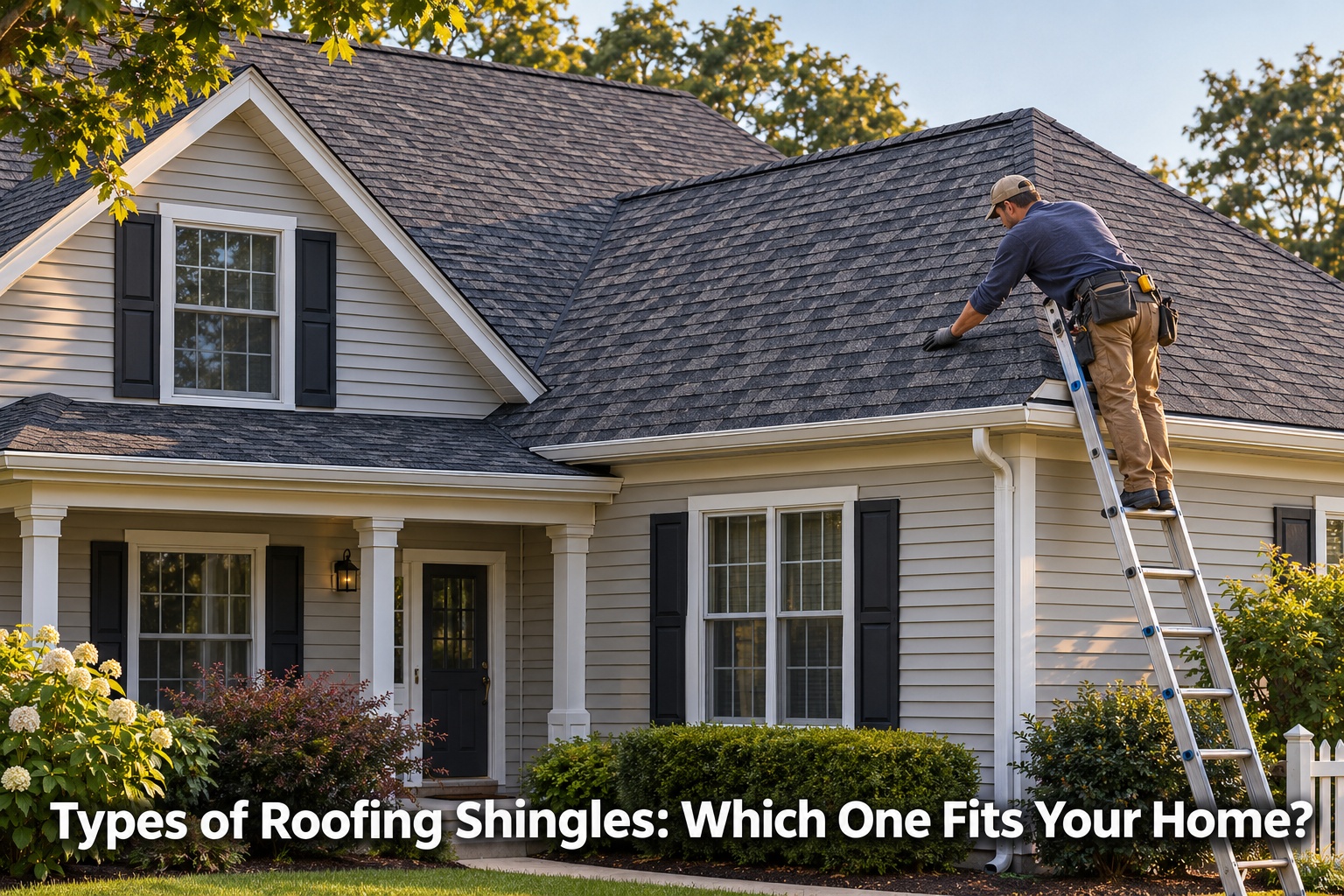
No single shingle is the right answer for every house. The best choice depends on your roof’s shape and pitch, the structure underneath, your budget, local code and how much weather your home takes each year. A shingle that suits a shaded ranch in the pines may be a poor match for a bayfront home in a salt wind.
Legacy Exteriors is a roofing, siding, window and door contractor serving South Jersey and southeastern Pennsylvania, and our own crews handle installation. We work under NJ HIC #13VH14270500 and PA HIC #PA223754. This guide walks through the main shingle types, how to match them to your conditions, what warranties actually say, and how color, roof components, cost drivers and contractor selection fit together.
Read it before you start collecting estimates, and the conversations get a lot easier.
Types of Roofing Shingles at a Glance
Most homes end up choosing between five material families. Each has a different weight, look and set of trade-offs, and local building code and manufacturer warranty terms can narrow the field further.
| Shingle Type | Main Strength | Main Consideration | Relative Cost Level |
|---|---|---|---|
| Three-tab asphalt | Simple, economical design | Thinner profile, flatter look | Entry level |
| Architectural asphalt | Dimensional look, wider product range | Ratings vary by product | Mid range |
| Stone-coated metal | Tile or shake appearance in steel | Needs compatible underlayment | Premium |
| Slate and concrete | Distinctive, heavy-duty character | Structure may need reinforcement | Premium |
| Wood shake | Natural appearance | Moisture, growth and fire concerns | Mid range to premium |
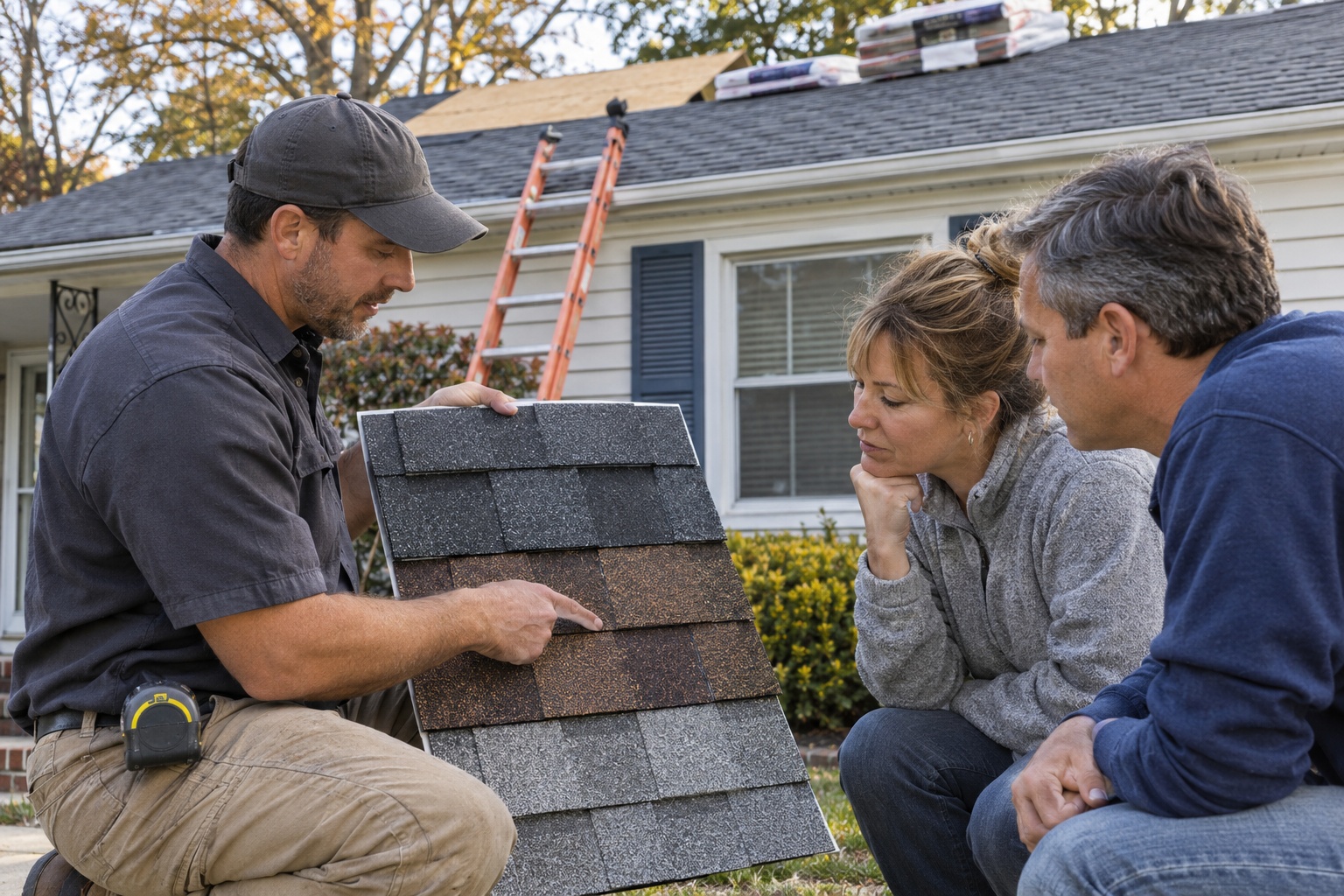
Asphalt Shingles: Three-Tab and Architectural
Asphalt is the most common residential roofing material, and it comes in two basic designs. The difference between them affects how the roof looks, how it performs and what warranty you may qualify for.
Within each design, manufacturers also sort products into tiers, which matters as much as the three-tab versus architectural choice.
Three-Tab Shingles
Three-tab shingles are the basic, thinner design. Each shingle has uniform tabs, which gives the roof a flat, even look.
They still make sense on a simple roof where budget is the priority, or on an outbuilding. They fall short where you want depth in the finished look, or where you need the higher ratings that thicker products often carry.
Architectural Shingles
Architectural shingles are generally thicker and built in layers, which creates a dimensional look. That thickness can affect appearance, durability and product ratings.
Depending on the product, architectural shingles may also carry longer manufacturer warranties and higher wind ratings. So are they worth the extra money? For most homeowners, the added cost buys a better-looking roof and stronger specs on paper. Check the numbers on the specific product, not the category.
Named Product Tiers Within a Single Line
Manufacturers organize shingles into tiers inside a single line. You will see standard, designer, premium, storm-rated, cool and flexible-profile options.
Owens Corning’s Duration Series works this way. Warranty length, wind rating and fire class belong to the individual product, not the whole category. Two architectural shingles can have different specs, so compare product sheets side by side.
Metal, Slate, Concrete and Wood Shake Options
Beyond asphalt, the premium materials trade simplicity for distinctive looks and, in some cases, greater weight. Each one comes with installation requirements worth understanding before you fall for a sample board.
Underlayment matters too. Some non-asphalt materials, including tile, metal and slate, require compatible underlayment because of fire or high-temperature considerations.
Stone-Coated Metal Shingles
Stone-coated steel shingles can be designed to resemble concrete or clay tile, or wood shakes. You get a traditional look on a steel base.
The underlayment needs to be compatible with the material. Your installer should confirm that before the first panel goes down.
Slate and Concrete: Weight and Structure
Slate and concrete products are substantially heavier than asphalt shingles. The roof structure may need reinforcement before installation.
That answers a common question: can you put metal, slate or tile shingles on an existing roof? Possibly, but verify structural capacity, compatible underlayment, installation requirements and local code first. Never choose a heavy material on appearance alone.
Wood Shakes and Shake-Look Alternatives
Wood shakes have a natural beauty, but they are not maintenance-free. Moisture, biological growth and fire-related concerns can all affect how well they suit your home.
If you love the look but not the upkeep questions, asphalt shingles designed to mimic wood shake are an alternative. They give you the texture with the familiar installation of asphalt.
Matching Shingles to Wind, Storm and Shore Conditions
Where your home sits matters as much as what it looks like. South Jersey has a wide spread of exposure, from sheltered inland streets to open bayfront lots, and the housing stock reflects it.
Homeowners often search for the best roofing shingles for a coastal home, or high wind resistant roofing shingles. The honest answer starts with the specific product and the way it is installed.
High-Wind and Coastal Exposure
Homes near the shore, along the bays and out toward the Black Horse Pike and White Horse Pike corridors deal with gusty, open conditions. When comparing the best roof shingles for high wind, look at each product’s stated wind rating and its installation requirements.
Shore homes also tend to be older, with varied roof shapes. No shingle is storm-proof. A higher rating improves your odds, but installation quality and roof condition do the rest of the work.
Rain, Hail and Impact Resistance
Class 4 impact-resistant shingles are an option for areas with hail exposure. Evaluate them by reading the product’s testing and warranty documents rather than assuming a label tells the whole story.
People also ask how long asphalt shingles last in New Jersey. No honest number fits every roof. Lifespan depends on exposure, attic ventilation, installation quality and the product itself.
Fastening Zones and Wind Performance Features
A reinforced nailing zone is one feature that separates otherwise similar shingles. It gives the fasteners a stronger area to hold, which supports wind performance.
Read wind warranties carefully. Owens Corning lists a 60-MPH wind-resistance limited warranty for its Supreme shingles, and that applies to that product. It is a warranty limit, not a promise the roof will survive every gust.
Warranties, Specs and What They Actually Cover
A warranty is a contract, so read it like one. Owens Corning states that its standard Duration Series shingles carry a Limited Lifetime Warranty for manufacturing defects, for the owner of a single-family detached home, subject to the warranty terms.
That wording covers defects under stated conditions. It does not mean the roof will last a lifetime.
- Algae resistance: StreakGuard coverage is listed as 25 years for specified shingle lines when qualifying hip-and-ridge products are used. Otherwise the period can be reduced. It describes resistance, not permanent prevention.
- Fire rating: Class A is the highest UL fire rating, but it applies to specific products, not every shingle.
- Documents: Technical specs and warranty documents live on the manufacturer’s site. Pull them for the exact product you are considering.
Shingle Colors and Style Choices
Color deserves real time, because you will see it every day for years. Ask for printed samples, hold them against your siding and trim in different light, and use manufacturer visualizer tools to preview the result.
Color also ties into the rest of the exterior. If you are updating siding, windows or doors as well, plan the palette together so the pieces work as one design.
Light-colored or reflective shingles are available. Be cautious about energy claims, though. We cannot promise a specific cooling savings in South Jersey from a lighter shingle, so treat it as a style and product option.
Your Roof as a System, Not Just Shingles
Shingles are one layer of several. A complete roof also includes underlayment, ventilation, starter strips, ridge caps and accessories, and each one affects how the whole assembly performs.
Manufacturer system warranties can require matched components. Owens Corning approaches roofing as a system, so the parts are meant to work together.
Because our own crews install the roof, the same team handles each layer from start to finish. That continuity helps keep the system intact instead of split across several hands.
What Drives Roofing Cost and Permit Questions
Price depends on a handful of factors, and they matter more than the shingle name alone.
- Roof size: more area means more material and labor.
- Pitch: steeper roofs are slower and harder to work.
- Existing layers: tear-off of more than one layer adds work.
- Material: premium materials cost more than entry-level asphalt.
- Access: tight lots and tall homes change the job.
Permits and local code review belong in the material decision, especially for heavier products. If storm damage is involved, the insurance process can add steps, and outcomes vary.
Choosing a Roofing Contractor
Ask which manufacturer products the contractor installs and whether their own crews do the work. Request a written scope, find out who handles permits and ask how warranty paperwork gets processed.
Verify credentials yourself, and be wary of tier claims you cannot confirm. Legacy Exteriors holds NJ HIC #13VH14270500 and PA HIC #PA223754. A roof inspection and written estimate is the natural first step.
Conclusion
The right shingle depends on your roof, your structure, your exposure and your goals. Asphalt covers most homes well, premium materials suit the right structures, and product-level specs matter more than category labels.
Start with an honest look at your roof’s condition and your local conditions. Then schedule an assessment with Legacy Exteriors, and we will help you match a product to your home.
Ready for a straight answer on your own roof? Call Legacy Exteriors at (609) 623-5523 or request a free estimate and we will take a look.
Frequently Asked Questions
What are the different types of roofing shingles?
The main types are asphalt (three-tab and architectural), stone-coated metal, slate, concrete and wood shake. Each differs in weight, appearance, maintenance needs and cost level.
Are architectural shingles worth the extra money?
Often, yes. They are generally thicker, and depending on the product they may carry longer warranties and higher wind ratings. Compare the specific product’s documents before deciding.
What roofing shingles are best for wind, rain and hail?
It depends on the product. Look at wind ratings, reinforced nailing zones and Class 4 impact-resistant options. No shingle is storm-proof, and installation quality matters.
Can I put metal, slate or tile shingles on my existing roof?
Maybe. Verify structural capacity, compatible underlayment, installation requirements and local code first. Heavy materials like slate and concrete may require reinforcement before installation.